

Hey there! As a supplier of automatic molding machines, I often get asked this question: Can an automatic molding machine produce products with high strength? Well, let's dig into this topic and find out.
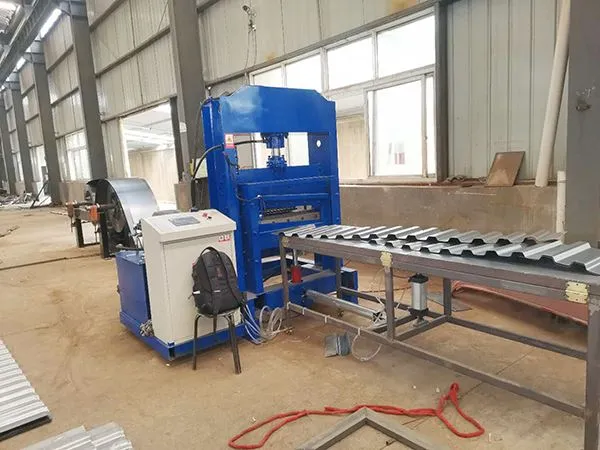

First off, let's understand what an automatic molding machine is. It's a piece of equipment that automates the process of shaping materials into specific forms. These machines can handle a wide range of materials, like plastics, metals, and composites. They're used in various industries, from automotive to consumer goods, because they offer high efficiency and precision.
Now, the big question is whether they can produce high - strength products. The answer is a resounding yes! But it depends on several factors.
Material Selection
The type of material you use is crucial. For instance, if you're using high - grade steel in a metal molding process, the final product is likely to have high strength. High - carbon steel, for example, has excellent tensile strength and can withstand heavy loads. In the plastic industry, engineering plastics like polycarbonate and polyamide are known for their high strength and are commonly used in automatic molding machines. These materials have inherent properties that contribute to the strength of the final product.
Machine Design and Capability
The design of the automatic molding machine plays a vital role. A well - designed machine can apply the right amount of pressure, temperature, and speed during the molding process. For example, in injection molding, the machine needs to inject the molten material into the mold cavity with the correct pressure. If the pressure is too low, the material may not fill the mold properly, leading to weak spots in the product. On the other hand, if the pressure is too high, it can cause defects like flash or even damage the mold.
Our company offers a variety of automatic molding machines, each designed to meet different production needs. For example, our Corrugated Roll Forming Machine is specifically designed to produce corrugated products with high strength. It uses advanced roll - forming technology to shape the material into a corrugated pattern, which significantly enhances the strength and rigidity of the final product.
Process Control
Controlling the molding process is essential for producing high - strength products. This includes monitoring and adjusting parameters such as temperature, pressure, and cooling time. In thermoplastic molding, for example, the cooling time is critical. If the product cools too quickly, it can develop internal stresses, which may reduce its strength. Conversely, if the cooling time is too long, it can lead to a decrease in production efficiency.
Advanced automatic molding machines are equipped with sophisticated control systems that can precisely regulate these parameters. They use sensors and feedback mechanisms to ensure that the process stays within the optimal range. This level of control helps to produce consistent, high - strength products.
Post - Processing
Sometimes, post - processing steps are necessary to further enhance the strength of the molded products. Heat treatment is a common post - processing method for metal products. It can change the microstructure of the metal, improving its hardness, toughness, and strength. For plastic products, annealing can be used to relieve internal stresses and improve dimensional stability.
Our H-type Girder Assembly Tooling is an excellent example of a machine that can be used in post - processing. It helps to assemble H - type girders accurately, ensuring that the final structure has high strength and stability.
Quality Assurance
To ensure that the products produced by automatic molding machines have high strength, a comprehensive quality assurance system is needed. This includes in - process inspection and final product testing. Non - destructive testing methods, such as ultrasonic testing and X - ray inspection, can be used to detect internal defects in the products. Mechanical testing, such as tensile testing and hardness testing, can also be performed to measure the strength of the products.
We also offer Beam Straightening Machine, which can be used in the quality control process. It helps to straighten beams that may have become deformed during the molding or post - processing steps, ensuring that the final product meets the required strength and dimensional standards.
Real - World Examples
Let's look at some real - world examples to illustrate how automatic molding machines can produce high - strength products. In the automotive industry, many engine components, such as pistons and cylinder heads, are produced using automatic molding machines. These components need to have high strength to withstand the high - pressure and high - temperature environment inside the engine. By using the right materials, machine design, and process control, automatic molding machines can produce these components with the required strength.
In the construction industry, pre - cast concrete elements are often produced using automatic molding machines. These elements, such as beams and columns, need to have high strength to support the weight of the building. The use of automatic molding machines ensures that these elements are produced with consistent quality and high strength.
Conclusion
So, to answer the question, yes, an automatic molding machine can produce products with high strength. It all boils down to the right combination of material selection, machine design, process control, post - processing, and quality assurance. As a supplier of automatic molding machines, we're committed to providing our customers with the best equipment and solutions to help them produce high - strength products.
If you're in the market for an automatic molding machine and want to produce high - strength products, don't hesitate to get in touch with us. We can offer you professional advice and customized solutions based on your specific needs. Let's work together to take your production to the next level!
References
- "Manufacturing Engineering and Technology" by Serope Kalpakjian and Steven R. Schmid
- "Plastics Processing: Modeling and Simulation" by Frank Hensen and Jörg Michaeli


