

Friction welding is a solid-state welding process that has gained significant popularity in various industries due to its efficiency, quality, and ability to join dissimilar materials. As a leading welding machine supplier, we are often asked about how friction welding machines work. In this blog post, I'll delve into the principles, components, and working process of friction welding machines, providing you with a comprehensive understanding of this advanced welding technology.
Principles of Friction Welding
Friction welding is based on the principle of converting mechanical energy into heat energy through friction. When two workpieces are rubbed against each other under pressure, the friction between their contact surfaces generates heat. As the temperature rises, the material at the interface softens, becoming plastic. Then, by applying an axial force, the softened materials are forged together, forming a strong metallurgical bond without melting the base materials. This solid-state joining process offers several advantages over traditional fusion welding methods, such as higher joint strength, minimal distortion, and the ability to join materials that are difficult to weld by other means.
Components of a Friction Welding Machine
A typical friction welding machine consists of several key components, each playing a crucial role in the welding process:
- Spindle Unit: The spindle unit is responsible for rotating one of the workpieces at a high speed. It usually includes a motor, a transmission system, and a chuck or fixture to hold the workpiece securely. The rotational speed and torque of the spindle can be precisely controlled to meet the requirements of different welding applications.
- Hydraulic System: The hydraulic system provides the axial force required to press the two workpieces together during the welding process. It consists of a hydraulic pump, cylinders, valves, and a control unit. The hydraulic system allows for accurate control of the pressure and force applied to the workpieces, ensuring consistent and reliable welding results.
- Control System: The control system is the brain of the friction welding machine. It monitors and controls various parameters such as rotational speed, axial force, welding time, and temperature. Modern friction welding machines are often equipped with advanced control systems that use programmable logic controllers (PLCs) and human-machine interfaces (HMIs) to provide operators with easy-to-use controls and real-time monitoring of the welding process.
- Fixture and Tooling: Fixtures and tooling are used to hold the workpieces in place and ensure proper alignment during the welding process. They are designed to be compatible with different workpiece shapes and sizes and can be customized according to specific welding requirements. The quality and precision of the fixtures and tooling have a significant impact on the welding quality and efficiency.
Working Process of a Friction Welding Machine
The working process of a friction welding machine can be divided into several stages:
- Workpiece Preparation: Before welding, the workpieces need to be properly prepared. This includes cleaning the surfaces to be welded to remove any dirt, oil, or oxide layers, which can affect the welding quality. The workpieces are then loaded into the fixtures of the welding machine and aligned accurately.
- Initial Contact and Friction Heating: Once the workpieces are loaded and aligned, the spindle unit starts rotating one of the workpieces at a pre-set speed. The other workpiece is then brought into contact with the rotating workpiece under a controlled axial force. As the two workpieces rub against each other, friction generates heat at the contact interface. The heat causes the material at the interface to soften and reach a plastic state.
- Forge Stage: After a certain period of friction heating, the rotation of the spindle is stopped, and an increased axial force is applied to the workpieces. This axial force, known as the forge force, causes the softened materials at the interface to flow and mix, forming a strong metallurgical bond. The forge force is maintained for a specific time to ensure proper bonding and consolidation of the joint.
- Cooling and Post-Welding Treatment: After the forge stage, the welded joint is allowed to cool naturally or with the help of a cooling system. Once the joint has cooled down, it may undergo post-welding treatments such as machining, heat treatment, or surface finishing to improve its mechanical properties and appearance.
Applications of Friction Welding Machines
Friction welding machines are widely used in various industries, including automotive, aerospace, manufacturing, and energy. Some common applications of friction welding include:
- Automotive Industry: Friction welding is used to join components such as axles, driveshafts, steering columns, and engine parts. The high strength and reliability of friction-welded joints make them ideal for automotive applications, where safety and performance are critical.
- Aerospace Industry: In the aerospace industry, friction welding is used to join components made of lightweight materials such as aluminum, titanium, and composites. The ability to join dissimilar materials and the high quality of the welded joints make friction welding a preferred choice for aerospace applications.
- Manufacturing Industry: Friction welding is used in the manufacturing of various products, such as tools, pipes, and fittings. The process offers high productivity, low cost, and excellent weld quality, making it suitable for mass production.
- Energy Industry: Friction welding is used in the energy industry to join components in power generation, oil and gas, and renewable energy systems. The ability to join materials with different properties and the high integrity of the welded joints make friction welding an important technology for the energy sector.
Our Welding Machine Offerings
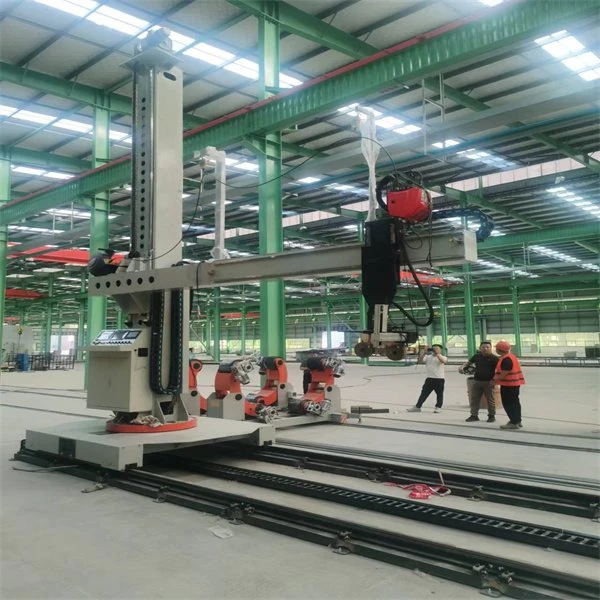
As a leading welding machine supplier, we offer a wide range of high-quality welding machines, including Laser Automatic Welding Machine, Automatic Tank Girth Welding Machine, and Laser Tracking Semi-Trailer Floor Automatic Welding Machine. Our machines are designed to meet the diverse needs of our customers and are backed by our professional technical support and after-sales service.
If you are interested in learning more about our welding machines or have any specific requirements for your welding applications, please feel free to contact us. Our experienced sales team will be happy to assist you in selecting the right welding machine for your needs and provide you with detailed information and quotations. We look forward to the opportunity to work with you and help you achieve your welding goals.

References
- Alvarez, J. I., & Schaffer, G. B. (2003). Friction stir welding: Process, automation, and control. Journal of Manufacturing Science and Engineering, 125(2), 266-271.
- Mishra, R. S., & Ma, Z. Y. (2005). Friction stir welding and processing. Materials Science and Engineering: R: Reports, 50(1-2), 1-78.
- Schmidt, H. (2006). Friction welding - A solid-state joining process. Welding in the World, 50(1-2), 1-12.


