

Hey there! As a welding machine supplier, I've dealt with all sorts of welding machines, big and small. Today, I wanna talk about the limitations of small-sized welding machines.
1. Power and Amperage Constraints
First off, small-sized welding machines usually have limited power and amperage. Most of these machines are designed for light-duty tasks, like home repairs or small DIY projects. They typically operate at lower amperages, which means they can't generate enough heat to weld thick materials.
For instance, if you're trying to weld a 1/4-inch thick steel plate, a small welding machine just won't cut it. The low amperage won't be able to melt the metal properly, resulting in a weak and unreliable weld. In contrast, larger industrial welding machines can handle much higher amperages, allowing them to weld thicker materials with ease.
This power limitation also affects the welding speed. With less power, the welding process is slower because it takes longer to heat up and melt the metal. If you're working on a large project, this can be a real pain, as it significantly increases the overall time required to complete the job.
2. Duty Cycle Issues
Another major limitation of small-sized welding machines is their duty cycle. The duty cycle refers to the amount of time a welding machine can operate continuously within a 10-minute period. Small welding machines often have a low duty cycle, say around 20% - 30%.
What does this mean in practical terms? Well, if a small welding machine has a 20% duty cycle at 100 amps, it can only weld for 2 minutes out of every 10 minutes at that amperage. After that, it needs to cool down for the remaining 8 minutes. This can be a huge drawback, especially when you're in the middle of a project and need to keep welding without long breaks.
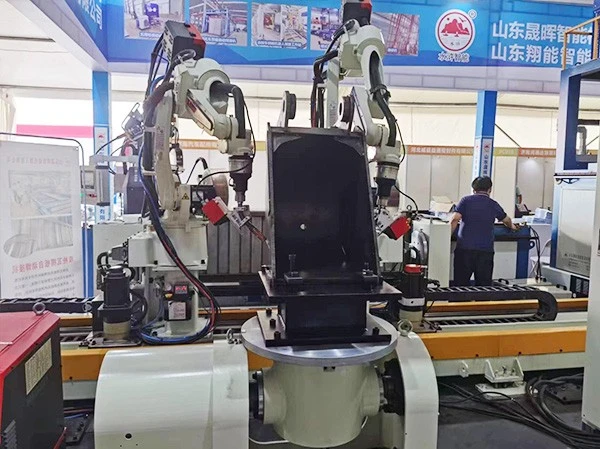
On the other hand, larger welding machines usually have a higher duty cycle, allowing for more continuous welding. This is crucial in industrial settings where time is money, and any downtime can lead to significant losses.
3. Welding Process Limitations
Small-sized welding machines are often limited in terms of the welding processes they can support. Many of them are only capable of basic processes like stick welding or MIG welding with a limited range of wire diameters.
For example, some small MIG welders may only be able to use thin welding wires, which restricts their application to thin materials. They may not be suitable for more advanced welding processes like TIG welding, which requires precise control of the welding arc and filler metal.

TIG welding is often used for high-quality, precision welding jobs, such as in the aerospace or automotive industries. If you're a professional welder working on these types of projects, a small welding machine simply won't provide the functionality you need.
4. Portability vs. Durability
While small-sized welding machines are generally more portable, this often comes at the expense of durability. These machines are usually made with lighter materials to keep their weight down, which can make them less robust and more prone to damage.
In a harsh industrial environment, where welding machines are often moved around, bumped, and exposed to dust and debris, a small and lightweight machine may not hold up as well as a larger, more heavy-duty one. For example, the internal components of a small welding machine may be more vulnerable to vibration and shock, leading to premature failure.
5. Lack of Advanced Features
Small welding machines typically lack the advanced features found in larger, more expensive models. These features can include things like adjustable voltage and wire feed speed, advanced welding modes, and digital controls.
Adjustable voltage and wire feed speed are important for achieving the right welding parameters for different materials and thicknesses. Without these adjustments, it can be difficult to get a consistent and high-quality weld. Advanced welding modes, such as pulse welding or synergic welding, can also improve the welding quality and efficiency, but they're often not available on small machines.
Digital controls make it easier to set and monitor the welding parameters, providing more precise control over the welding process. Small welding machines usually have basic analog controls, which are less accurate and more difficult to use.
6. Limited Application Range
Due to their power, process, and feature limitations, small-sized welding machines have a limited application range. They're mainly suitable for light-duty tasks, such as welding thin sheets of metal, repairing small household items, or doing some basic DIY projects.
If you're involved in industries like construction, manufacturing, or automotive repair, where you need to weld thick materials or perform complex welding tasks, a small welding machine won't be sufficient. You'll need a larger, more powerful machine that can handle the demands of these applications.
However, it's important to note that small welding machines still have their place. They're great for hobbyists, DIY enthusiasts, and small workshops where the welding requirements are not very demanding. They're also more affordable and easier to store and transport.
Conclusion
In conclusion, while small-sized welding machines have their advantages, such as portability and affordability, they also come with several limitations. These include power and amperage constraints, duty cycle issues, limited welding processes, lower durability, lack of advanced features, and a restricted application range.
If you're in the market for a welding machine, it's important to consider your specific needs and requirements. If you're just starting out with welding or only need to do light-duty work, a small welding machine may be a good choice. But if you're a professional welder or need to handle more demanding projects, you'll likely need to invest in a larger, more powerful machine.
If you're interested in learning more about our range of welding machines, including Corrugated Board Automatic Welding Machine, Robot Automatic Welding Workstation, and Aluminum Can Car Circumferential Seam Automatic Welding Machine, feel free to reach out to us for a consultation. We're here to help you find the right welding solution for your needs. Let's talk about your project and see how we can assist you in getting the best welding machine for the job.
References
- AWS Welding Handbook, American Welding Society
- Welding: Principles and Applications, Larry Jeffus


