

As a supplier of automatic welding machines, I've witnessed firsthand the critical role that welding voltage plays in determining the quality of welds. In the world of welding, where precision and reliability are paramount, understanding the effects of welding voltage is essential for achieving optimal results. In this blog post, I'll delve into the intricacies of welding voltage and its impact on the quality of automatic welding machines.
Understanding Welding Voltage
Welding voltage is a fundamental parameter in the welding process. It refers to the electrical potential difference between the electrode and the workpiece. In simple terms, it's the force that drives the flow of electrical current through the welding circuit. The voltage level directly affects the heat input, arc characteristics, and ultimately, the quality of the weld.
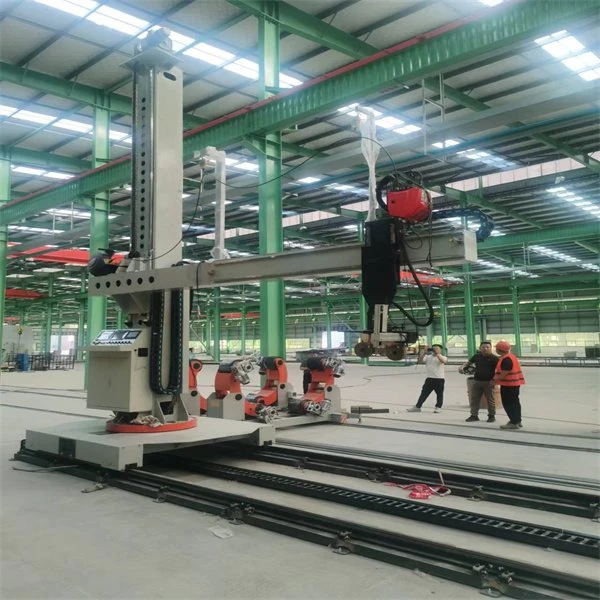

In automatic welding machines, the welding voltage is carefully controlled to ensure consistent and high-quality welds. By adjusting the voltage, operators can fine-tune the welding process to meet the specific requirements of the application. However, finding the right balance is crucial, as too high or too low a voltage can lead to a range of issues.
Effects of Welding Voltage on Weld Quality
Penetration
One of the most significant effects of welding voltage is on weld penetration. Penetration refers to the depth to which the weld metal fuses with the base metal. Adequate penetration is essential for ensuring the strength and integrity of the weld joint.
When the welding voltage is too low, the heat input is insufficient to melt the base metal adequately. This results in shallow penetration, which can lead to weak welds that are prone to cracking and failure. On the other hand, when the voltage is too high, the excessive heat can cause the weld pool to become too large, leading to excessive penetration and potential burn-through.
To achieve optimal penetration, it's important to select the appropriate welding voltage based on the thickness and type of the base metal, as well as the welding process and electrode size. In general, higher voltages are required for thicker materials, while lower voltages are suitable for thinner materials.
Weld Bead Shape
The welding voltage also has a significant impact on the shape of the weld bead. The weld bead is the visible portion of the weld that is formed on the surface of the workpiece. A well-formed weld bead is smooth, uniform, and free of defects.
When the voltage is too low, the weld bead tends to be narrow and tall, with a high aspect ratio. This can result in a lack of fusion between the weld bead and the base metal, as well as poor wetting and spreading of the weld metal. On the other hand, when the voltage is too high, the weld bead becomes wide and flat, with a low aspect ratio. This can lead to excessive spatter, porosity, and a rough surface finish.
To achieve a desirable weld bead shape, it's important to maintain a consistent voltage throughout the welding process. This can be achieved by using a stable power source and ensuring proper electrode manipulation. Additionally, the welding speed and travel angle can also affect the weld bead shape, so these parameters should be carefully controlled as well.
Porosity
Porosity is a common defect in welding that refers to the presence of small holes or voids in the weld metal. Porosity can weaken the weld and reduce its corrosion resistance, making it a critical issue to address.
Welding voltage can have a significant impact on porosity. When the voltage is too low, the weld pool may not be hot enough to allow the gases to escape, resulting in the formation of porosity. On the other hand, when the voltage is too high, the excessive heat can cause the gases to expand rapidly, leading to the formation of large pores.
To minimize porosity, it's important to maintain a proper voltage level and ensure adequate shielding gas coverage. Additionally, the cleanliness of the workpiece and the electrode can also affect porosity, so these factors should be carefully controlled as well.
Spatter
Spatter refers to the small droplets of molten metal that are ejected from the weld pool during the welding process. Spatter can cause a range of issues, including damage to the workpiece, increased cleanup time, and reduced productivity.
Welding voltage can have a significant impact on spatter. When the voltage is too high, the excessive heat can cause the weld pool to become unstable, leading to the ejection of molten metal droplets. On the other hand, when the voltage is too low, the arc may not be stable enough, resulting in spatter as well.
To minimize spatter, it's important to select the appropriate welding voltage based on the welding process and electrode type. Additionally, the use of anti-spatter agents and proper electrode manipulation can also help reduce spatter.
Selecting the Right Welding Voltage
Selecting the right welding voltage is crucial for achieving optimal weld quality. The appropriate voltage level depends on a variety of factors, including the thickness and type of the base metal, the welding process, the electrode size, and the desired weld characteristics.
In general, it's recommended to start with a lower voltage and gradually increase it until the desired weld quality is achieved. This allows for fine-tuning of the voltage based on the specific requirements of the application. Additionally, it's important to follow the manufacturer's recommendations for the welding machine and electrode, as these guidelines are based on extensive testing and research.
Conclusion
In conclusion, welding voltage plays a critical role in determining the quality of automatic welding machines. By understanding the effects of welding voltage on penetration, weld bead shape, porosity, and spatter, operators can make informed decisions to optimize the welding process and achieve high-quality welds.
As a supplier of automatic welding machines, we offer a range of products designed to meet the diverse needs of our customers. Our Automatic Tank Girth Welding Machine, Tank Circumferential Seam Welding Machine, and Laser Tracking Gantry Submerged Arc Welding Machine are all equipped with advanced technology and features to ensure precise control of welding voltage and other parameters.
If you're interested in learning more about our automatic welding machines or have any questions about welding voltage and its impact on weld quality, please don't hesitate to contact us. Our team of experts is always available to provide you with the information and support you need to make the right choice for your welding application.
References
- AWS Welding Handbook, Volume 1: Welding Science and Technology, American Welding Society
- Welding Metallurgy and Weldability of Stainless Steels, John C. Lippold and David J. Kotecki
- Modern Welding Technology, Richard L. Petzold and Joseph F. Tooley


