

Hey there! As a supplier of cutting machines, I often get asked about how to measure the cutting accuracy of these machines. It's a crucial aspect, especially for businesses that rely on precise cuts for their products. In this blog, I'll share some practical ways to measure the cutting accuracy of a cutting machine.
First off, let's understand why cutting accuracy matters. In industries like manufacturing, jewelry making, and automotive, a small deviation in cutting can lead to significant problems. For instance, in the production of electronic components, an inaccurate cut can render a part useless. So, ensuring high - precision cutting is essential for quality control and cost - effectiveness.
Using a Calibration Piece
One of the simplest ways to measure cutting accuracy is by using a calibration piece. You can create a test piece with known dimensions. For example, you can make a square with each side measuring exactly 100 mm. Then, use your cutting machine to cut this square. After the cutting process is complete, measure the dimensions of the cut square using a high - precision measuring tool like a micrometer or a caliper.
If the measured dimensions of the cut square are very close to the original 100 mm on each side, say within a tolerance of ±0.1 mm, then your cutting machine has a high level of accuracy. However, if there are significant deviations, it indicates that there might be some issues with the machine, such as misaligned blades or incorrect software settings.
Analyzing the Edge Quality
Another important aspect of cutting accuracy is the edge quality of the cut piece. A high - accuracy cutting machine should produce clean, smooth edges without any burrs or rough spots. You can visually inspect the edges of the cut material. If you see jagged edges or burrs, it could mean that the cutting speed is too high, the blade is dull, or the machine's pressure is not properly adjusted.

To quantify the edge quality, you can use a surface roughness tester. This device measures the roughness of the cut edge. A lower roughness value indicates a smoother edge, which is a sign of better cutting accuracy. For example, in the case of laser cutting, a well - calibrated laser cutting machine should produce edges with a surface roughness of less than 10 micrometers.
Checking the Repeatability
Repeatability is a key factor in determining the cutting accuracy of a machine. It refers to the machine's ability to make the same cut consistently over multiple attempts. To test the repeatability, you can set up the machine to cut multiple identical pieces. For instance, cut ten identical rectangles with specific dimensions.
After cutting all ten pieces, measure each one and compare the dimensions. If the dimensions of all the pieces are very similar, with only minor variations, then the machine has good repeatability. A high - quality cutting machine should have a repeatability within a tolerance of ±0.05 mm. Poor repeatability can be caused by mechanical wear and tear, loose components, or electrical issues.
Measuring the Kerf Width
The kerf width is the width of the material that is removed during the cutting process. It's an important parameter, especially in applications where material usage is critical. To measure the kerf width, you can cut a narrow strip of material and then measure the width of the cut using a microscope or a precision measuring device.
For example, in a saw cutting operation, the kerf width might be around 1 - 2 mm, depending on the type of saw blade used. In laser cutting, the kerf width can be much smaller, typically in the range of 0.1 - 0.5 mm. A consistent kerf width is a sign of accurate cutting. If the kerf width varies significantly from one cut to another, it could indicate problems with the cutting tool or the machine's control system.
Impact of Machine Type on Cutting Accuracy
Different types of cutting machines have different levels of accuracy. Let's take a look at some common types:
Fully Automatic Laser Cutting Machine
A Fully Automatic Laser Cutting Machine is known for its high precision. These machines use a focused laser beam to cut through materials. The laser beam can be controlled very precisely, allowing for cuts with extremely high accuracy. They are often used in industries where fine details and high - quality cuts are required, such as in the production of jewelry or electronic circuit boards.
You can find a wide range of fully automatic laser cutting machines at Fully Automatic Laser Cutting Machine Factory. These machines are designed to offer excellent cutting accuracy and repeatability.
Planar Laser Cutting Machine
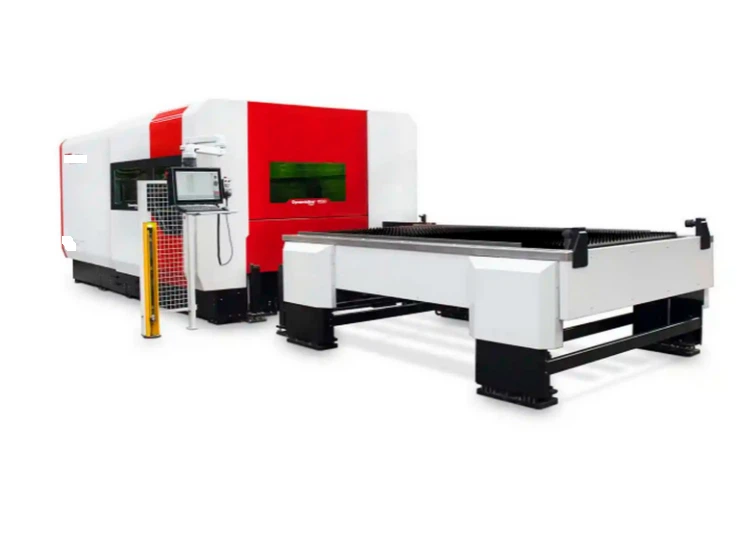
The Planar Laser Cutting Machine is another type of laser - based cutting machine. It is specifically designed for cutting flat materials. Planar laser cutting machines can achieve very high cutting speeds while maintaining good accuracy. They are commonly used in the metalworking industry for cutting sheets of steel, aluminum, and other metals.
Troubleshooting Low Cutting Accuracy
If you find that your cutting machine has low accuracy, there are several steps you can take to troubleshoot the issue. First, check the machine's software settings. Make sure that the cutting parameters such as speed, power, and feed rate are set correctly. Incorrect software settings can lead to inaccurate cuts.
Next, inspect the cutting tool. If it's a blade, check if it's dull or damaged. A dull blade will not be able to make clean, accurate cuts. Replace the blade if necessary. Also, check for any mechanical issues such as loose belts, misaligned guides, or worn - out bearings. Tighten any loose components and replace any worn - out parts.
Conclusion
Measuring the cutting accuracy of a cutting machine is essential for ensuring the quality of the products and the efficiency of the production process. By using methods like testing with a calibration piece, analyzing edge quality, checking repeatability, and measuring kerf width, you can accurately assess the accuracy of your machine.
If you're in the market for a high - accuracy cutting machine, we're here to help. Whether you need a Fully Automatic Laser Cutting Machine or a Planar Laser Cutting Machine, we have a wide range of options to meet your needs. Contact us for more information and to start a procurement discussion. We're committed to providing you with the best cutting solutions for your business.
References
- Smith, J. (2020). Precision Cutting in Manufacturing. Industrial Technology Journal.
- Brown, A. (2019). Measuring Cutting Accuracy: A Practical Guide. Manufacturing Insights Magazine.
- Johnson, M. (2021). Types of Cutting Machines and Their Accuracy. Engineering Today.


