

As a seasoned supplier of forming machines, I've witnessed firsthand the crucial role that effective heat dissipation plays in the performance and longevity of these industrial powerhouses. In this blog post, I'll delve into the various heat dissipation methods employed in forming machines, shedding light on their principles, advantages, and applications.
Why Heat Dissipation Matters in Forming Machines
Before we explore the specific heat dissipation methods, let's understand why it's so important in forming machines. During the forming process, significant amounts of heat are generated due to mechanical friction, electrical resistance, and the deformation of materials. If this heat is not properly dissipated, it can lead to a range of problems, including:
- Reduced Machine Efficiency: Excessive heat can cause components to expand, leading to increased friction and wear. This, in turn, can reduce the machine's efficiency and productivity.
- Component Damage: High temperatures can damage sensitive electronic components, lubricants, and seals, leading to costly repairs and downtime.
- Safety Risks: Overheating can pose a safety risk to operators, as it can cause burns or even start fires.
By implementing effective heat dissipation methods, we can ensure that forming machines operate at optimal temperatures, minimizing the risk of damage and maximizing their performance and lifespan.
Common Heat Dissipation Methods in Forming Machines
1. Air Cooling
Air cooling is one of the most common and cost-effective heat dissipation methods used in forming machines. It works by using fans or blowers to circulate air over the hot components, transferring heat away from them and into the surrounding environment.
- Natural Air Cooling: In some cases, forming machines can rely on natural air circulation to dissipate heat. This method is suitable for low-power machines or those operating in well-ventilated areas. However, it may not be sufficient for high-power machines or those operating in hot environments.
- Forced Air Cooling: Forced air cooling uses fans or blowers to increase the airflow over the hot components, enhancing the heat transfer rate. This method is more effective than natural air cooling and is commonly used in medium to high-power forming machines.
Advantages of air cooling:
- Low Cost: Air cooling systems are relatively inexpensive to install and maintain.
- Simple Design: Air cooling systems are easy to design and implement, making them a popular choice for many manufacturers.
- Good for Low to Medium Power Applications: Air cooling is suitable for low to medium power forming machines, where the heat generation is not excessive.
Disadvantages of air cooling:
- Limited Cooling Capacity: Air cooling has a limited cooling capacity, and it may not be sufficient for high-power machines or those operating in hot environments.
- Noise Pollution: Fans and blowers can generate noise, which may be a concern in some applications.
- Dust and Debris Accumulation: Air cooling systems can draw in dust and debris, which can accumulate on the components and reduce their efficiency.
2. Liquid Cooling
Liquid cooling is a more advanced heat dissipation method that uses a liquid coolant, such as water or a refrigerant, to transfer heat away from the hot components. The coolant is circulated through a closed-loop system, absorbing heat from the components and carrying it to a heat exchanger, where it is dissipated into the surrounding environment.
- Water Cooling: Water cooling is the most common type of liquid cooling used in forming machines. It uses water as the coolant, which is circulated through a radiator or a chiller to dissipate the heat. Water cooling is suitable for high-power machines or those operating in hot environments, as it has a higher cooling capacity than air cooling.
- Refrigerant Cooling: Refrigerant cooling uses a refrigerant, such as Freon or ammonia, as the coolant. The refrigerant is circulated through a compressor, condenser, and evaporator, where it absorbs heat from the components and releases it into the surrounding environment. Refrigerant cooling is more efficient than water cooling, but it is also more expensive and complex to install and maintain.
Advantages of liquid cooling:
- High Cooling Capacity: Liquid cooling has a higher cooling capacity than air cooling, making it suitable for high-power machines or those operating in hot environments.
- Precise Temperature Control: Liquid cooling systems can provide precise temperature control, ensuring that the components operate at optimal temperatures.
- Quiet Operation: Liquid cooling systems are generally quieter than air cooling systems, as they do not use fans or blowers.
Disadvantages of liquid cooling:
- High Cost: Liquid cooling systems are more expensive to install and maintain than air cooling systems.
- Complex Design: Liquid cooling systems are more complex to design and implement, requiring additional components such as pumps, radiators, and chillers.
- Risk of Leakage: Liquid cooling systems have a risk of leakage, which can cause damage to the components and the surrounding environment.
3. Heat Pipes
Heat pipes are a passive heat transfer device that uses a combination of evaporation and condensation to transfer heat from one point to another. They consist of a sealed tube filled with a working fluid, such as water or ammonia, and a wick structure that helps to transport the fluid from the condenser to the evaporator.
- How Heat Pipes Work: When the heat pipe is heated at one end (the evaporator), the working fluid inside the tube evaporates, absorbing heat in the process. The vapor then travels to the other end of the tube (the condenser), where it condenses back into a liquid, releasing the heat. The wick structure helps to transport the liquid back to the evaporator, completing the cycle.
- Advantages of Heat Pipes: Heat pipes have several advantages over other heat dissipation methods, including high thermal conductivity, compact size, and low power consumption. They are also suitable for applications where space is limited or where precise temperature control is required.
Disadvantages of Heat Pipes:
- Limited Heat Transfer Capacity: Heat pipes have a limited heat transfer capacity, and they may not be suitable for high-power applications.
- High Cost: Heat pipes are more expensive than other heat dissipation methods, such as air cooling or liquid cooling.
- Complex Manufacturing Process: Heat pipes require a complex manufacturing process, which can increase the cost and lead time.
Choosing the Right Heat Dissipation Method for Your Forming Machine
When choosing a heat dissipation method for your forming machine, several factors need to be considered, including:
- Power Rating: The power rating of the forming machine determines the amount of heat generated during operation. High-power machines require more efficient heat dissipation methods, such as liquid cooling or heat pipes.
- Operating Environment: The operating environment of the forming machine, including the temperature, humidity, and dust levels, can also affect the choice of heat dissipation method. Machines operating in hot or dusty environments may require more robust cooling systems.
- Space Constraints: The available space for the heat dissipation system is another important factor to consider. In some cases, compact heat dissipation methods, such as heat pipes or air cooling, may be more suitable.
- Cost: The cost of the heat dissipation system, including the initial purchase cost and the operating cost, is also an important consideration. In general, air cooling is the most cost-effective option, while liquid cooling and heat pipes are more expensive.
Conclusion
Effective heat dissipation is essential for the performance and longevity of forming machines. By understanding the different heat dissipation methods available and choosing the right one for your application, you can ensure that your forming machine operates at optimal temperatures, minimizing the risk of damage and maximizing its performance and lifespan.
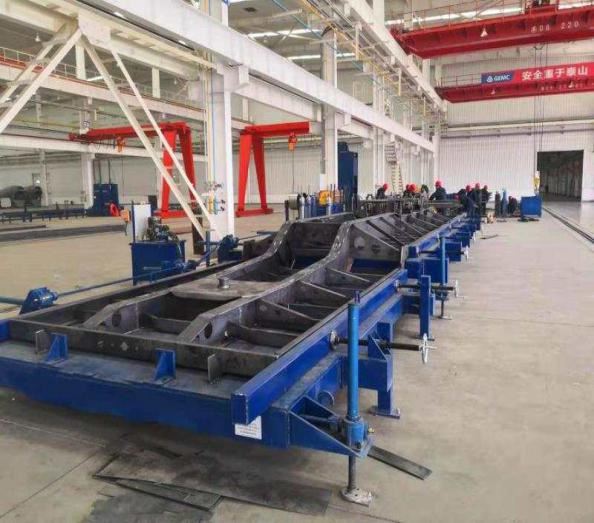
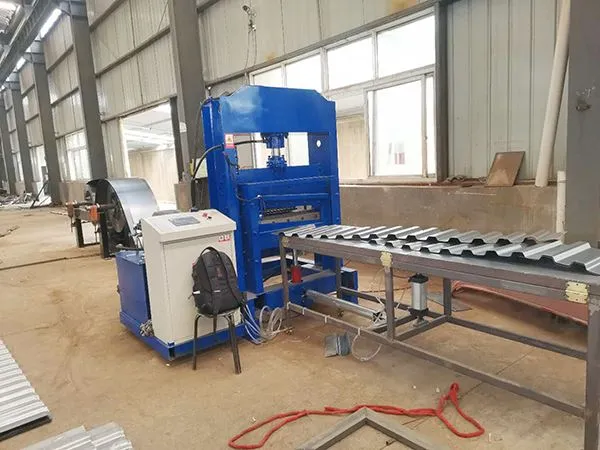
If you're in the market for a forming machine or need advice on heat dissipation methods, please don't hesitate to [contact us]. We're a leading supplier of Vacuum Forming Machine, Semi-trailer Corrugated Board Forming Machine, and Wearing Edge Beam Platform, and we're committed to providing our customers with the highest quality products and services.
References
- Incropera, F. P., & DeWitt, D. P. (2002). Fundamentals of heat and mass transfer. John Wiley & Sons.
- Kakac, S., & Pramuanjaroenkij, A. (2005). Handbook of single-phase convective heat transfer. John Wiley & Sons.
- Kreith, F., & Bohn, M. S. (2001). Principles of heat transfer. Cengage Learning.


