

What is the heat - affected zone of a large plane laser cutting machine?
As a supplier of large plane laser cutting machines, I often encounter questions from customers regarding the heat - affected zone (HAZ) in the context of laser cutting. Understanding the heat - affected zone is crucial for anyone involved in metal fabrication, as it can significantly impact the quality and performance of the cut parts.
Definition of the Heat - Affected Zone
The heat - affected zone is the area of the base material that has not been melted but whose mechanical properties have been altered due to the high temperatures generated during the laser cutting process. When a large plane laser cutting machine focuses a high - energy laser beam on a metal sheet, the intense heat rapidly melts and vaporizes the material at the cutting path. However, the heat also spreads to the surrounding areas, causing changes in the microstructure of the metal.
In a large plane laser cutting operation, the HAZ is typically adjacent to the cut edge. The size and characteristics of the HAZ depend on several factors, including the type of material being cut, the power and mode of the laser, the cutting speed, and the assist gas used.
Factors Affecting the Heat - Affected Zone
Material Type
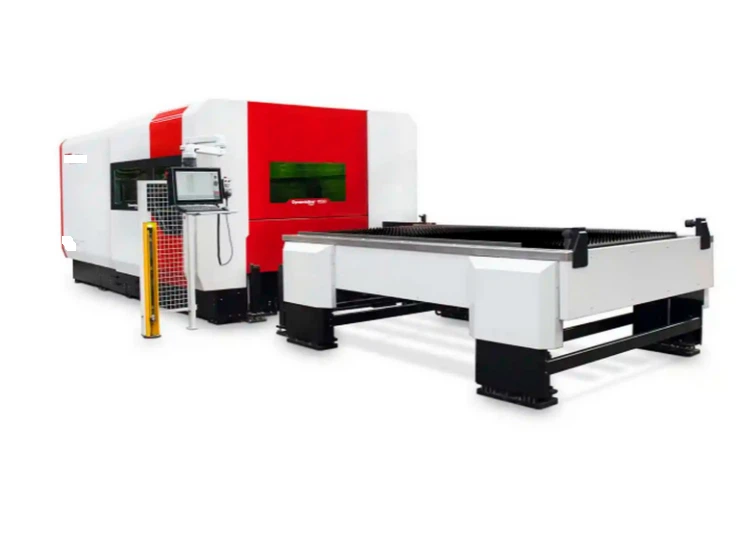
Different materials have different thermal conductivities and melting points, which directly influence the size of the HAZ. For example, metals with high thermal conductivity, such as copper and aluminum, tend to dissipate heat more quickly. As a result, the HAZ in these materials is usually smaller compared to metals with lower thermal conductivity, like stainless steel. When using our Large Plane Laser Cutting Machine, operators need to adjust the cutting parameters according to the specific material to minimize the HAZ.
Laser Power and Mode
The power of the laser is a critical factor in determining the heat input during cutting. Higher laser power generally means more energy is delivered to the material, which can lead to a larger HAZ. However, in some cases, using a higher - power laser with a shorter pulse duration can actually reduce the HAZ. This is because the short - pulse laser can remove material more efficiently, minimizing the time the surrounding material is exposed to high temperatures. Our Cutting Machine Flat Laser offers adjustable power and different laser modes to optimize the cutting process for various materials and applications.
Cutting Speed
The cutting speed also plays a significant role in controlling the HAZ. A slower cutting speed allows more time for the heat to spread into the surrounding material, resulting in a larger HAZ. On the other hand, increasing the cutting speed reduces the heat exposure time of the material, thereby minimizing the HAZ. However, if the cutting speed is too high, it may lead to incomplete cutting or poor cut quality. Our Fully Automatic Laser Cutting Machine is equipped with advanced control systems that can precisely adjust the cutting speed to achieve the best balance between HAZ reduction and cut quality.
Assist Gas
The assist gas used in laser cutting helps to remove the molten material from the cutting path and can also affect the HAZ. For example, oxygen is often used as an assist gas when cutting mild steel. The exothermic reaction between oxygen and the steel provides additional energy for cutting, but it can also increase the heat input and potentially enlarge the HAZ. In contrast, nitrogen is commonly used for cutting stainless steel and aluminum. Nitrogen acts as an inert gas, preventing oxidation and reducing the heat - affected area.
Effects of the Heat - Affected Zone
Mechanical Properties
One of the most significant effects of the HAZ is the change in the mechanical properties of the material. In the HAZ, the microstructure of the metal can be altered, leading to changes in hardness, strength, and ductility. For example, in some steels, the HAZ may become harder and more brittle due to the formation of martensite, a hard and brittle phase of steel. This can reduce the overall toughness of the part and make it more susceptible to cracking and failure under stress.

Corrosion Resistance
The HAZ can also affect the corrosion resistance of the material. Changes in the microstructure and the presence of residual stresses in the HAZ can create areas that are more prone to corrosion. For instance, in stainless steel, the HAZ may experience a loss of chromium due to high - temperature oxidation, which can reduce the material's ability to form a protective oxide layer and increase its susceptibility to corrosion.
Minimizing the Heat - Affected Zone
As a supplier, we understand the importance of minimizing the HAZ for our customers. Here are some strategies that can be employed when using our large plane laser cutting machines:
Optimize Cutting Parameters
By carefully selecting the appropriate laser power, cutting speed, and assist gas, operators can significantly reduce the HAZ. Our machines are equipped with user - friendly control interfaces that allow for easy adjustment of these parameters. Additionally, we provide technical support and training to help our customers optimize the cutting process for their specific applications.
Use of Cooling Systems
Some of our large plane laser cutting machines are equipped with advanced cooling systems. These systems can help to dissipate heat more quickly from the cutting area, reducing the size of the HAZ. For example, water - cooling systems can be used to cool the laser head and the workpiece during cutting, ensuring stable cutting performance and minimizing heat - related issues.
Post - Processing
In some cases, post - processing techniques can be used to mitigate the effects of the HAZ. Heat treatment processes such as annealing can be applied to relieve residual stresses and restore the mechanical properties of the material in the HAZ. Surface treatments, such as passivation for stainless steel, can also improve the corrosion resistance of the cut parts.
Conclusion
In conclusion, the heat - affected zone is an important consideration in large plane laser cutting. Understanding the factors that affect the HAZ and its potential effects on the material is essential for achieving high - quality cut parts. As a leading supplier of Large Plane Laser Cutting Machine, we are committed to providing our customers with advanced machines and technical support to minimize the HAZ and optimize the cutting process.
If you are interested in learning more about our large plane laser cutting machines or have any questions regarding the heat - affected zone, we encourage you to contact us for a detailed discussion. Our team of experts is ready to assist you in finding the best solutions for your metal fabrication needs.
References
- "Laser Cutting Technology: Principles and Applications" by John Doe
- "Metal Fabrication Handbook" by Jane Smith
- Industry research reports on laser cutting and heat - affected zones


