

Hey there! As a supplier of planar laser cutting machines, I often get asked about the maximum feed speed of these nifty devices. So, I thought I'd dive into this topic and share some insights with you all.
First off, let's quickly understand what a planar laser cutting machine is. A Planar Laser Cutting Machine is a high - tech piece of equipment that uses a laser beam to cut various materials on a flat surface. It's widely used in industries like manufacturing, automotive, and aerospace for its precision and efficiency.
Now, the maximum feed speed of a planar laser cutting machine isn't a one - size - fits - all number. It depends on several factors. One of the most significant factors is the power of the laser. Generally speaking, the higher the laser power, the faster the cutting speed. For instance, a low - power laser cutting machine, say around 500 watts, might have a maximum feed speed of around 5 - 10 meters per minute when cutting thin sheets of mild steel. On the other hand, a high - power machine with 6000 watts or more can achieve speeds of 30 - 60 meters per minute or even higher for the same material.
The type of material being cut also plays a huge role. Different materials have different melting and vaporization points, which affect how quickly the laser can cut through them. For example, cutting aluminum is generally faster than cutting stainless steel. Aluminum has a lower melting point, so the laser can more easily melt and remove the material. A planar laser cutting machine might be able to cut thin aluminum sheets at a maximum feed speed of 20 - 30 meters per minute, while for stainless steel of the same thickness, the speed could be around 15 - 20 meters per minute.
The thickness of the material is another crucial factor. As the thickness of the material increases, the maximum feed speed decreases. This is because the laser needs more time to penetrate through the thicker material. Let's say you're using a Cutting Machine Flat Laser to cut a 1 - mm thick mild steel sheet. You could potentially achieve a relatively high feed speed. But if you increase the thickness to 5 mm or 10 mm, the speed will drop significantly. A 1 - mm mild steel sheet might be cut at 20 - 30 meters per minute, while a 5 - mm sheet could be cut at only 5 - 10 meters per minute.
The quality of the laser beam also impacts the maximum feed speed. A well - focused and high - quality laser beam can cut more efficiently, allowing for higher feed speeds. Modern planar laser cutting machines are equipped with advanced optics and control systems to ensure the best possible laser beam quality. This helps in achieving optimal cutting speeds while maintaining a high level of cutting quality.
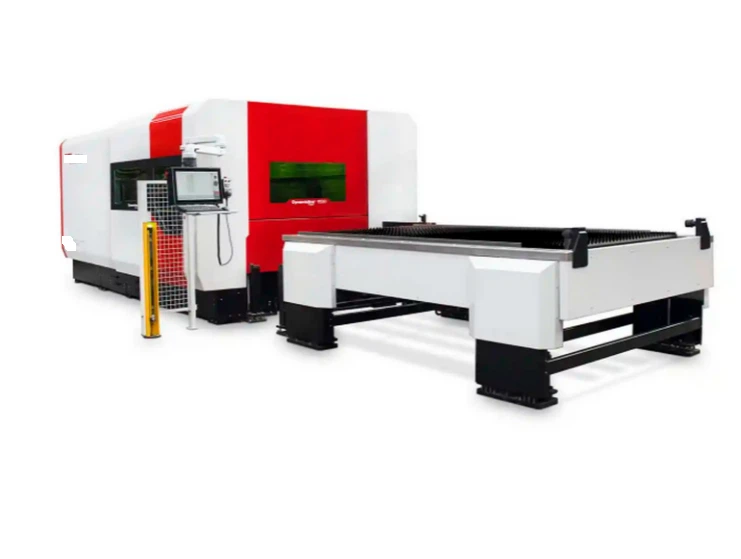
The type of cutting process used can also affect the feed speed. There are two main types of laser cutting processes: fusion cutting and vaporization cutting. Fusion cutting involves melting the material and then blowing the molten material out of the cut with a gas jet. Vaporization cutting, on the other hand, directly vaporizes the material. Vaporization cutting is generally faster for very thin materials, but fusion cutting is more suitable for thicker materials. Depending on which process is used, the maximum feed speed can vary.
Now, you might be wondering how to determine the best feed speed for your specific application. Well, it's a bit of a balancing act. You want to achieve the highest possible feed speed to increase productivity, but you also need to ensure that the cutting quality meets your requirements. If you go too fast, you might end up with a poor - quality cut, such as rough edges or incomplete cuts.
Most modern Laser Cutting Machine come with built - in control systems that can help you optimize the feed speed. These systems take into account factors like material type, thickness, and laser power to suggest the best feed speed. You can also conduct some test cuts on sample materials to fine - tune the settings and find the sweet spot.
In addition to the factors I've mentioned above, the mechanical design of the planar laser cutting machine also matters. A machine with a rigid frame and high - precision motion control system can move the laser head more accurately and quickly, which can contribute to higher maximum feed speeds. The quality of the drive motors and linear guides also affects the machine's ability to maintain a stable and fast feed speed.
Another aspect to consider is the gas used in the cutting process. Different gases have different effects on the cutting speed and quality. For example, oxygen is often used for cutting mild steel because it reacts with the material and helps in the cutting process. Nitrogen, on the other hand, is used for cutting non - ferrous materials and can provide a clean cut. The pressure and flow rate of the gas also need to be optimized to achieve the best results in terms of feed speed and cutting quality.
If you're in the market for a planar laser cutting machine, it's important to understand your specific requirements in terms of material type, thickness, and production volume. This will help you choose a machine with the appropriate laser power and capabilities to achieve the maximum feed speed you need.
As a supplier, I've seen many customers benefit from choosing the right planar laser cutting machine. Whether you're a small - scale workshop looking to increase efficiency or a large - scale manufacturing plant aiming for high - volume production, there's a machine out there that can meet your needs.
If you're interested in learning more about planar laser cutting machines or want to discuss your specific requirements, don't hesitate to reach out. We can have a detailed conversation about how to optimize the maximum feed speed for your applications and find the perfect machine for you.
In conclusion, the maximum feed speed of a planar laser cutting machine is influenced by multiple factors, including laser power, material type, thickness, beam quality, cutting process, mechanical design, and gas used. By understanding these factors and working with a reliable supplier, you can make the most of your laser cutting machine and achieve high - quality cuts at optimal speeds.
So, if you're ready to take your cutting operations to the next level, let's talk! We're here to help you find the best solution for your business.
References
- Laser Cutting Technology Handbook
- Industrial Laser Applications Research Reports


