What is the Repeatability of a Planar Laser Cutting Machine?
As a supplier of planar laser cutting machines, I often encounter customers who are curious about the concept of repeatability in these machines. Repeatability is a crucial factor that directly impacts the quality and efficiency of laser cutting processes. In this blog post, I will delve into what repeatability means in the context of planar laser cutting machines, why it matters, and how it can affect your manufacturing operations.
Understanding Repeatability
Repeatability, in the realm of planar laser cutting machines, refers to the ability of the machine to consistently reproduce the same cutting results over multiple cycles. When a laser cutting machine has high repeatability, it can cut the same pattern or part with a high degree of accuracy and consistency, cycle after cycle. This is essential for industries where precision and uniformity are paramount, such as automotive manufacturing, aerospace, and electronics.
Imagine you are producing a batch of metal parts for a high - end electronic device. Each part must be cut to exact specifications to ensure proper fit and function. A planar laser cutting machine with excellent repeatability will cut each part with the same dimensions, tolerances, and surface finish, reducing the likelihood of rejects and ensuring a high - quality end product.
Factors Affecting Repeatability
Several factors can influence the repeatability of a planar laser cutting machine. One of the primary factors is the machine's mechanical structure. A rigid and stable frame is essential to minimize vibrations and ensure that the laser head moves precisely along the programmed path. Machines with high - quality linear guides, ball screws, and servo motors tend to have better repeatability because they can translate the control signals into accurate and consistent movements.
The control system of the laser cutting machine also plays a vital role. A sophisticated control system can accurately interpret the cutting program and send precise commands to the machine's components. It should be able to compensate for any small errors or variations in the mechanical system, ensuring that the cutting process remains consistent.
Another factor is the quality of the laser source. A stable and reliable laser beam is necessary for consistent cutting. Fluctuations in laser power, beam quality, or beam focus can lead to variations in the cutting results. High - end laser sources are designed to maintain a stable output over long periods, contributing to better repeatability.
Measuring Repeatability
Repeatability is typically measured in terms of positional accuracy and dimensional accuracy. Positional accuracy refers to the ability of the laser head to return to the same position repeatedly. It is usually expressed in micrometers (μm) or thousandths of an inch. Dimensional accuracy, on the other hand, refers to the ability of the machine to cut parts with the same dimensions within a specified tolerance.
To measure repeatability, manufacturers often use a series of test cuts. They cut a pattern multiple times and then measure the dimensions and positions of the cuts using precision measuring tools such as coordinate measuring machines (CMMs) or optical measuring systems. The results are then analyzed to determine the machine's repeatability performance.
Importance of Repeatability in Manufacturing
In modern manufacturing, repeatability is not just a nice - to - have feature; it is a necessity. Here are some of the key reasons why repeatability is so important:
- Quality Assurance: High repeatability ensures that each part produced meets the same high - quality standards. This reduces the number of defective parts, improves the overall quality of the end product, and enhances customer satisfaction.
- Cost Savings: By reducing the number of rejects and rework, a planar laser cutting machine with good repeatability can save manufacturers significant costs. It also allows for more efficient use of raw materials, as less material is wasted due to inaccurate cuts.
- Increased Productivity: Consistent cutting results mean that the manufacturing process can be streamlined. There is less need for manual adjustments or inspections between cuts, allowing for faster production cycles and higher throughput.
Our Planar Laser Cutting Machines and Repeatability
At our company, we understand the importance of repeatability in planar laser cutting machines. That's why we have invested heavily in research and development to ensure that our machines offer the highest levels of repeatability.
Our Planar Laser Cutting Machine features a robust and rigid mechanical structure, made from high - quality materials to minimize vibrations and ensure precise movement. We use advanced linear guides and ball screws that are designed for long - term durability and accuracy.
The control system of our machines is state - of - the - art. It is capable of processing complex cutting programs with high precision and can compensate for any minor mechanical errors. We also use high - performance laser sources that are known for their stability and reliability, ensuring a consistent cutting process.
In addition to these features, we offer comprehensive training and support to our customers. Our technical experts can help you optimize the settings of your planar laser cutting machine to achieve the best possible repeatability for your specific applications.
Applications of Planar Laser Cutting Machines with High Repeatability
Planar laser cutting machines with high repeatability are used in a wide range of industries. In the automotive industry, they are used to cut precision parts such as engine components, chassis parts, and body panels. The high repeatability ensures that these parts fit together perfectly, improving the overall performance and safety of the vehicles.
In the aerospace industry, where precision is critical, planar laser cutting machines are used to cut complex shapes and thin materials. The ability to repeat the same cuts accurately is essential for producing high - quality aerospace components that meet strict safety and performance standards.
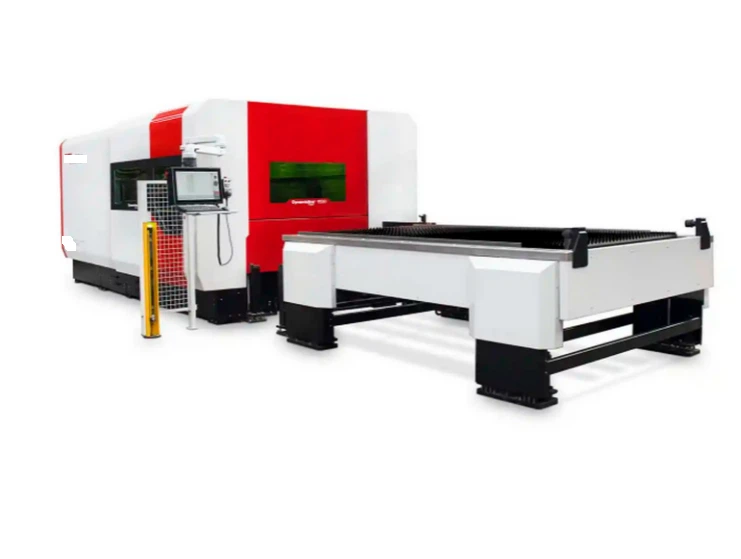
The electronics industry also benefits greatly from planar laser cutting machines with high repeatability. These machines are used to cut printed circuit boards (PCBs), flexible circuits, and other electronic components with micron - level precision. The consistent cutting results ensure that the electronic devices function properly and have a long lifespan.
Conclusion
Repeatability is a critical characteristic of planar laser cutting machines. It ensures consistent, high - quality cutting results, reduces costs, and increases productivity. As a supplier of planar laser cutting machines, we are committed to providing our customers with machines that offer the best possible repeatability.
If you are in the market for a Fully Automatic Laser Cutting Machine or a Cutting Machine Flat Laser, we invite you to contact us to discuss your specific requirements. Our team of experts will be happy to provide you with more information and help you find the perfect solution for your manufacturing needs.
References
- Laser Cutting Technology Handbook, 3rd Edition.
- Precision Engineering: Principles and Applications in Manufacturing.
- Journal of Laser Applications.