

Hey there! As a supplier of plate rolling machines, I often get asked about the vibration level during the machine's operation. It's a crucial topic because the vibration can affect the quality of the rolled plates, the lifespan of the machine, and even the safety of the operators. In this blog, we'll dig deep into what the vibration level of a plate rolling machine is and why it matters.
First things first, let's talk about what causes the vibration in a plate rolling machine. There are a few factors at play here. The primary reason is the mechanical force applied during the rolling process. When the machine is rolling a plate, the rollers exert a significant amount of pressure on the metal. This pressure can cause the machine to vibrate, especially if the plate is thick or made of a hard material.
Another factor is the design and construction of the machine itself. A well-built plate rolling machine with high-quality components is likely to have a lower vibration level compared to a cheaper, poorly-made one. For example, the bearings in the rollers play a crucial role. If they are of low quality, they can cause uneven rotation and thus increase the vibration.
The alignment of the rollers is also a big deal. If the rollers are not properly aligned, they won't apply the pressure evenly on the plate. This uneven pressure can lead to increased vibration and also result in a poor-quality rolled plate.
Now, onto the vibration level itself. What exactly is an acceptable vibration level for a plate rolling machine? Well, it depends on various factors such as the size of the machine, the material being rolled, and the specific requirements of the task. Generally speaking, a lower vibration level is better. For small-scale plate rolling machines used in workshops, a vibration level of less than 1.5 mm/s (rms - root mean square) is considered good. Larger industrial machines may have a slightly higher acceptable level, but it still should be kept as low as possible, usually around 2 - 3 mm/s (rms).
Why is it so important to keep the vibration level in check? There are several reasons. Firstly, high vibration can damage the machine's components over time. The constant shaking can cause the bearings to wear out faster, the bolts to loosen, and even lead to cracks in the frame. This not only increases the maintenance costs but also reduces the lifespan of the machine.
Secondly, vibration can affect the quality of the rolled plates. If the machine vibrates too much, the plate may not be rolled uniformly. You might end up with a plate that has wavy edges or inconsistent thickness, which is a big no-no in most industries.
Finally, from a safety perspective, excessive vibration can be dangerous for the operators. It can cause the machine to become unstable, increasing the risk of accidents.
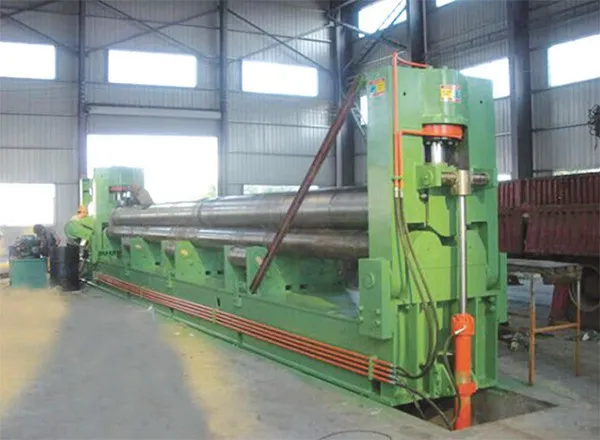
So, as a supplier, we take vibration levels very seriously. We offer a range of Automatic Plate Rolling Machine that are designed with advanced technology to minimize vibration. These machines use high - precision bearings and are carefully aligned during the manufacturing process.
Our CNC Hydraulic Plate Bending Machine also features a state - of - the - art control system that can adjust the pressure and speed to ensure a stable and low - vibration operation.
And for those of you working with stainless steel, our Stainless Steel Plate Rolling Machine is specially designed to handle this tough material with minimal vibration. Stainless steel is often harder to roll than other metals, but our machine is built to do it smoothly.
If you're having issues with high vibration in your current plate rolling machine, there are a few things you can do. First, check the machine for any loose bolts or parts and tighten them. Next, make sure the rollers are clean and free from any debris. Sometimes, a small piece of metal or dust can cause the vibration. If the issue persists, you may need to have a professional technician come and check the alignment of the rollers and the condition of the bearings.
In conclusion, understanding and controlling the vibration level of a plate rolling machine is essential for both the machine's longevity and the quality of the work. If you're in the market for a new plate rolling machine or thinking about upgrading your existing one, make sure to consider the vibration level as one of the important factors.

We at [Company Name] are here to help. We can provide you with detailed information about the vibration levels of our machines and also offer tailor - made solutions to meet your specific needs. Whether you're a small workshop owner or an industrial giant, we've got the right plate rolling machine for you. If you're interested in learning more or want to discuss a potential purchase, don't hesitate to reach out and start a procurement discussion with us.
References
- ISO 10816-3: Mechanical vibration – Evaluation of machine vibration by measurement on non-rotating parts – Part 3: Industrial machines with nominal power above 15 kW and nominal speeds between 120 r/min and 15 000 r/min
- Machinery Vibration Handbook by Tse, F. S.


