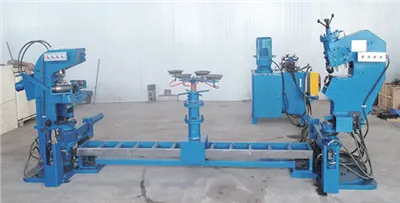
The standard operating procedure for an automated welding robot includes the following key steps:
Before welding operations, the welding process requirements must be clearly defined, including key technical indicators such as substrate type, weld location, welding speed, and current parameters. The robot's system integration is completed according to the process requirements, ensuring the robotic arm's working range covers all welding points while retaining sufficient degrees of freedom.
The robot's motion trajectory and welding actions are programmed using an offline programming system, and the rationality of the path planning is ensured through simulation verification. Core parameters such as welding current, voltage, and wire feed speed are set according to the process specifications, establishing a complete welding parameter package.
A trial run is performed before formal operation to verify the equipment's operating status and program compatibility. After confirmation, the automated welding process is initiated, and the robot completes all welding actions according to the preset program without human intervention.
Welding quality and process parameters are monitored in real time through an integrated sensing system, establishing a welding process database. After welding is completed, the equipment automatically enters standby mode, simultaneously generating a production record containing welding parameters and quality data.
This automated system significantly improves welding efficiency and process consistency, reduces operator workload, and minimizes the impact of welding fumes on the working environment. It is important to note that system training and procedure verification for operators must be completed before the equipment is put into use to ensure safe and standardized operation of the equipment.